
Beyond Burnout: The Neuroscience of Reclaiming Your Mental ‘Range’ from Digital Overload
For many high-achieving professionals, success has a hidden cost. Externally, you meet deadlines, lead teams, and drive results. Internally, however, a different story unfolds—one of persistent mental fog, a short fuse of irritability, and a low hum of chronic stress that never quite disappears. If this feels familiar, it's crucial to understand that this isn't a personal or professional failing. It is a predictable, biological consequence of modern digital life, a state we call 'compression'.
What is 'Signal Compression'? The Unseen Driver of Your Stress
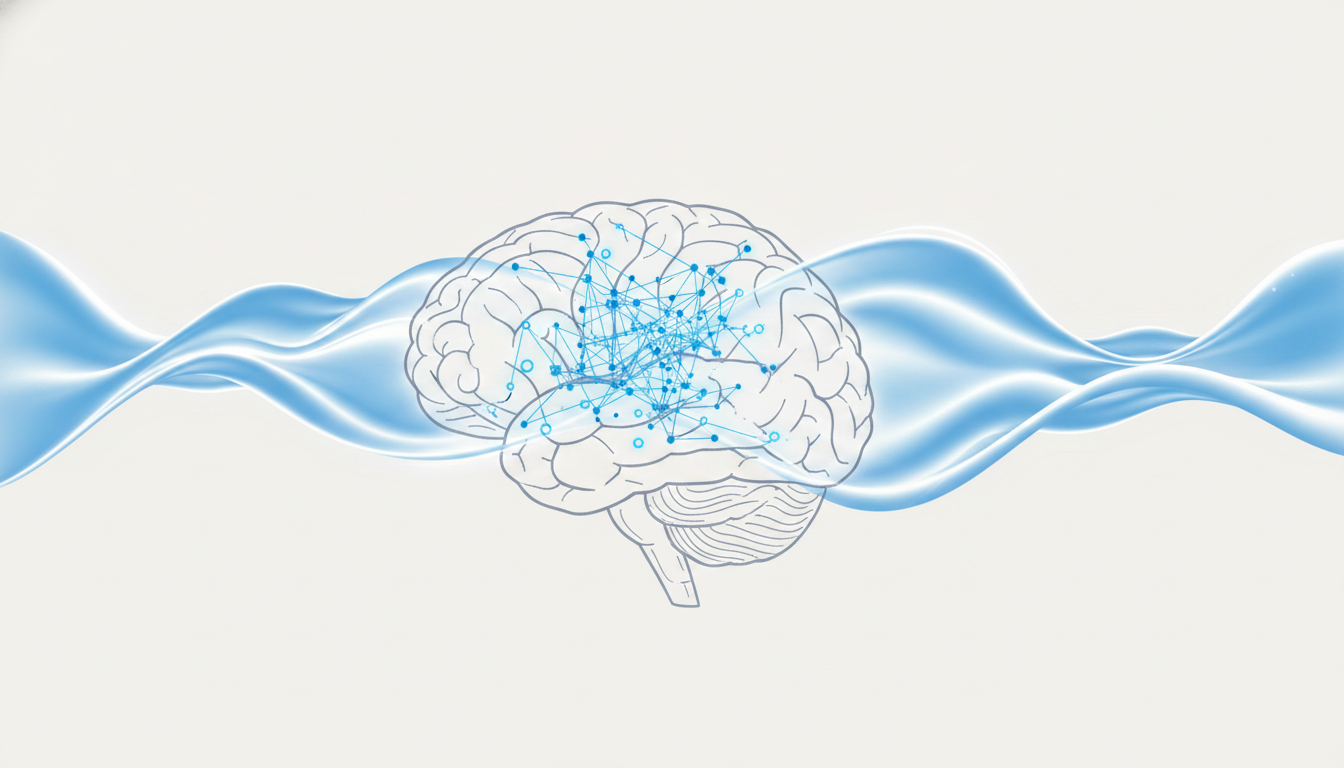
Every notification, email, and urgent request acts as a signal to your nervous system. In today's hyper-connected world, the sheer volume and speed of these signals are overwhelming. This constant digital barrage forces your biology into a perpetually reactive state, effectively narrowing your perceptual and emotional 'range'. Your focus constricts to only the most immediate threats and tasks, your emotional bandwidth shrinks, and your ability to think strategically or creatively diminishes. This isn't just a feeling of being overwhelmed; it's a physiological state of signal compression. It's the fundamental, upstream issue that creates downstream symptoms like anxiety, poor decision-making, and burnout.

Why Standard Stress-Relief Falls Short
Many professionals turn to standard solutions: productivity hacks, mindfulness apps, or even vacations. While these can offer temporary respite, they often fail to create lasting change. Why? Because they primarily address the symptoms of compression, not the root cause. A to-do list might organize the chaos, but it doesn't change the underlying biological signal that makes you feel chaotic. Simple meditation can calm you for a few minutes, but as soon as you re-engage with the digital flood, the compression returns. These methods are like patching a leaky pipe without turning off the water pressure. They don't fundamentally alter the reactive signal your nervous system has learned to generate.
The Signal Shift Solution: Introducing Microplasticity Routines
The CELF methodology offers a different approach—a fundamental intervention at the level of your biology. Instead of managing symptoms, it aims to change the signal itself. This is achieved through microplasticity routines: brief, frequent nervous system resets that take only 2-5 seconds to perform. These are not about extended meditation or belief; they are timing-based, neuroscience-consistent exercises designed to interrupt the pattern of compression. By integrating these micro-practices throughout your day, you begin to retrain your nervous system, teaching it to release its reactive state and effectively widen your perceptual and emotional 'range' back to its natural, expansive state.
Practical Application: Turning Digital Habits into Training Triggers
The true power of this system lies in its seamless integration into your existing life. A busy schedule doesn't allow for hour-long wellness rituals. Instead, CELF leverages the very sources of interruption as training opportunities. Consider the act of unlocking your phone—something you likely do dozens, if not hundreds, of times a day. Instead of being a mindless habit that pulls you into the digital stream, this moment can become a powerful trigger. By pairing the action of unlocking your phone with a 2-second nervous system reset, you transform a source of compression into a moment of expansion. This makes sophisticated self-regulation practical, accessible, and automatic, requiring no extra time from your demanding day.

Conclusion: Move from Reacting to Authoring Your Experience
The constant pressure of the modern world doesn't have to dictate your internal state. By understanding the neuroscience of 'compression,' you can move beyond simply coping with its symptoms. The shift from a reactive life to one of conscious authorship—what we call 'sovereignty'—is not a distant ideal but a trainable skill. It begins by changing the biological signal at its source. If you are ready to stop managing stress and start building a foundation of predictable internal control and higher clarity under pressure, it's time to discover how to reverse signal compression. Explore the CELF system to learn how these science-backed micro-practices can provide measurable relief and empower you to reclaim your full human range.
Leave a Reply