You're a high achiever. You've downloaded the meditation apps, implemented the productivity hacks, and maybe even spent hours in therapy. You do everything right, yet a persistent, low-grade hum of stress remains your constant companion. It’s the tension in your shoulders during a big presentation, the mental fog that clouds a key decision, the irritability that surfaces after a long day. If you feel like you're stuck on a hamster wheel of stress management without ever making real progress, it’s because you’re trying to solve the wrong problem. The issue isn't your coping mechanism; it's the faulty upstream signal that triggers the stress in the first place.
The Core Problem: Symptom Management vs. Signal Regulation
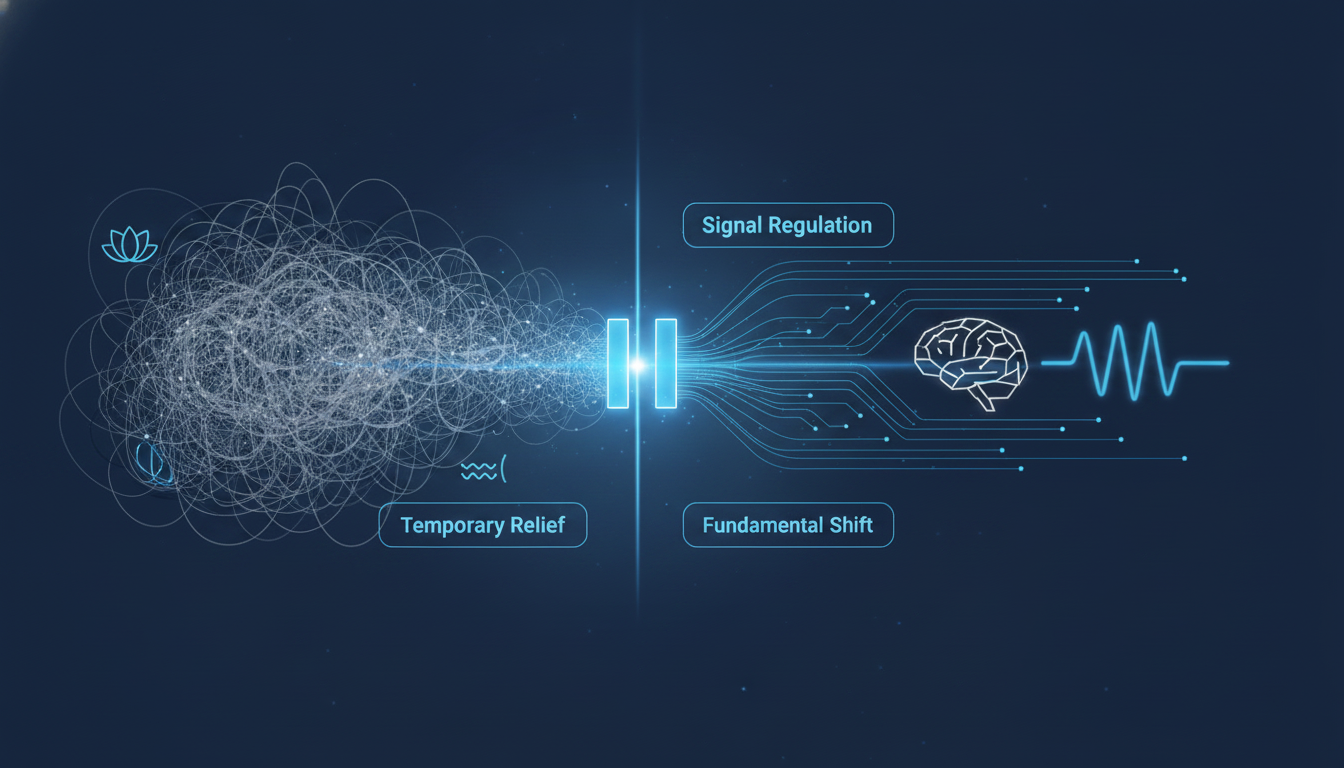
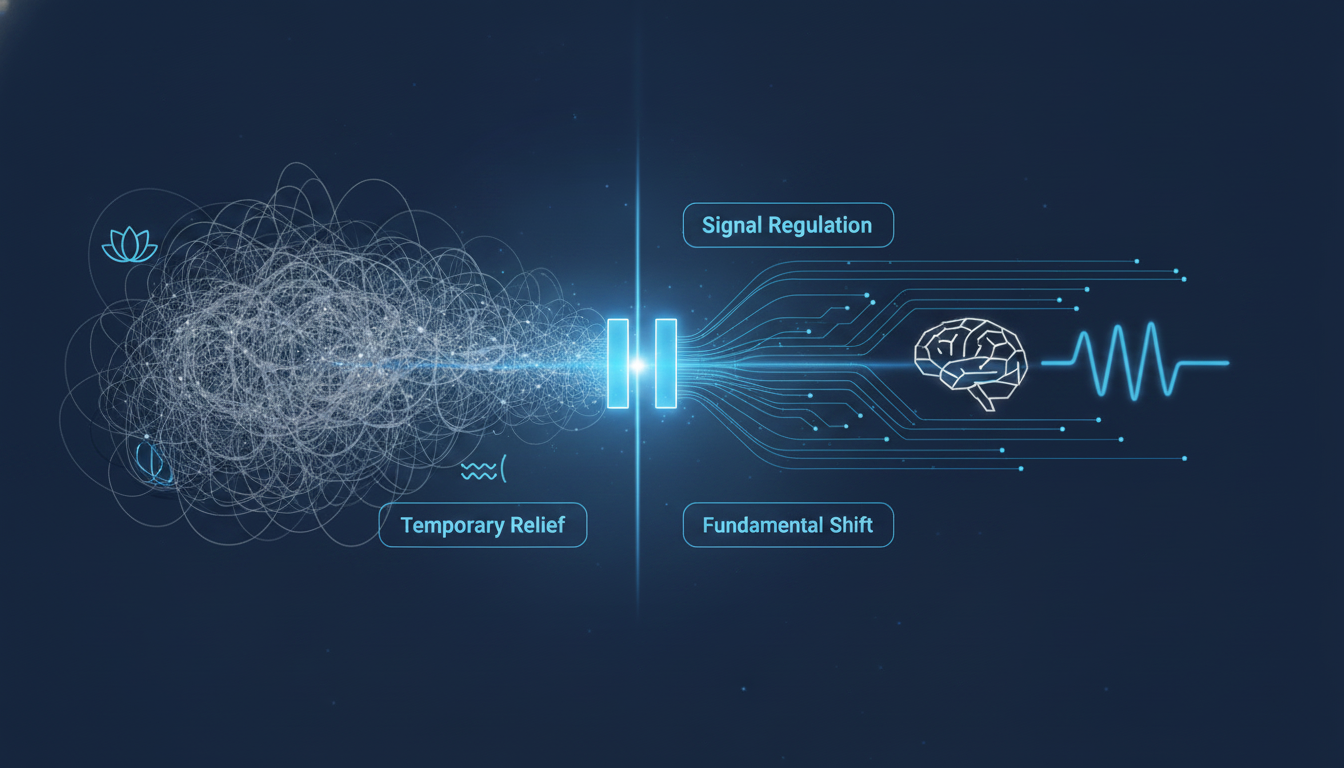
Traditional stress management techniques—like deep breathing or mindfulness—are designed to manage the symptoms of stress once they’ve already appeared. They are downstream solutions. While they can provide temporary relief, they don't address the root cause: a nervous system constantly primed for a fight-or-flight response. Modern life, with its endless digital pings and professional demands, puts our systems into a state of 'compression.' This is a biological reality where your perceptual width and emotional bandwidth literally narrow, forcing you into a reactive, tunnel-vision state. You're not failing at stress management; your environment is training your biology to send distress signals by default. Trying to meditate your way out of this is like trying to fix a leaky pipe by mopping the floor—you're managing the mess, not the source.
The Neuroscience of Your Internal State: Introducing the Signal Shift
To achieve a lasting change, you must intervene at a more fundamental level. This is where Signal Shift by CELF comes in. Our methodology is built on a neuroscience-consistent principle: by using brief, frequent interventions, you can retrain the very signal your nervous system sends. We utilize 'microplasticity routines'—tiny, 2-5 second exercises that are scientifically designed to recalibrate your internal state before a full-blown stress response is triggered. These aren't about calming down; they're about changing the biological transmission that precedes thought and emotion. By practicing these routines, you're not just coping; you are fundamentally re-architecting your internal wiring, shifting your baseline from chronic activation to calm, clear command.
From Digital Distraction to Inner Control: A Practical Guide
One of the most powerful aspects of the CELF system is its seamless integration into your existing daily habits. You don’t need to set aside an hour or find a quiet room. Instead, you can transform the very sources of digital distraction into powerful moments of self-regulation. For example, consider the number of times you unlock your phone each day. This can become your training trigger. Here’s how:
-
**Pause Before You Unlock:** The moment your hand reaches for your phone, pause for a single second.
-
**Execute the Micro-Practice:** Instead of immediately opening the device, perform a specific 2-second CELF routine—a simple, timing-based exercise that resets your nervous system.
-
**Proceed with Clarity:** Now, unlock your phone. You have just converted a mindless, reactive habit into a moment of intentional nervous system training.
By layering these micro-resets onto high-frequency digital actions, you can accumulate dozens, if not hundreds, of moments of neural recalibration throughout your day without disrupting your workflow. This is how you build a resilient, high-performance internal state.

Conclusion: Achieve True Sovereignty, Not Just Relief
The ultimate goal is not just to feel less stressed, but to achieve true 'sovereignty'—to move from being a reactor to your circumstances to becoming the conscious author of your experience. When you shift the upstream signal, the downstream effects are profound. You gain predictable control over your internal state, allowing you to maintain emotional stability without suppression. You unlock higher clarity under pressure, making better decisions when the stakes are high. This isn't another coping mechanism to add to your toolbox; it is a fundamental upgrade to your internal operating system.
If you are ready to stop managing symptoms and start addressing the source, it's time to explore a new framework. Discover how the CELF system can provide the tools for measurable relief and help you build the internal infrastructure necessary for sustained peak performance and genuine well-being. It's time to fix the signal.
Leave a Reply