

Beyond Damage Control: Why Your Stress Management Fails and What Actually Works
You’ve built a life that looks successful from the outside. You’re a high-achiever, you meet your deadlines, and you command respect in your field. Yet, internally, it’s a different story. You’re wrestling with a constant, low-grade hum of stress, mental fog, and a frustrating sense of being hijacked by your own reactions. You’ve tried everything—meditation apps, productivity hacks, maybe even therapy—but they all feel like temporary fixes, like bailing water from a boat with a persistent leak. This disconnect between external success and internal chaos isn’t a personal failing; it’s a sign that you’re stuck in a cycle of ‘damage control,’ addressing symptoms while the root cause runs unchecked.

The Real Culprit: Your Body’s Pre-Conscious ‘Threat’ Sequence
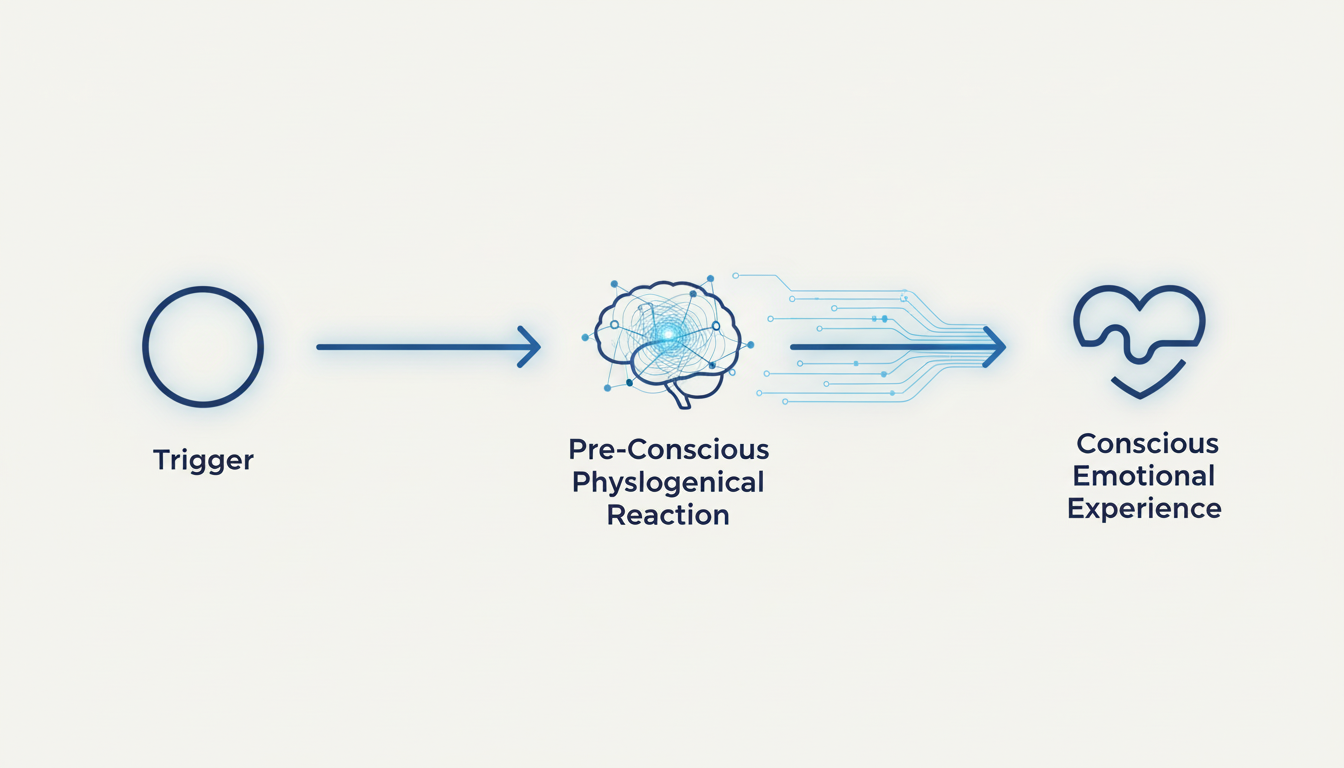
The reason your efforts feel futile is that you’re arriving too late to the scene. The problem isn’t a lack of willpower; it’s a matter of timing. Long before you consciously register a thought or an emotion, your nervous system has already initiated a physiological threat sequence. This deeply ingrained survival mechanism, often governed by the brain’s Default Mode Network (DMN), acts as an autopilot. When it perceives a potential threat—whether it’s an aggressive email or a looming deadline—it triggers a cascade of stress hormones and physical tension. By the time you feel stressed or anxious, your body is already in full-blown protection mode. You’re not fighting a thought; you’re fighting your own biology, which has already made its move.
The Upstream Solution: Introducing ‘Sequence Correction’
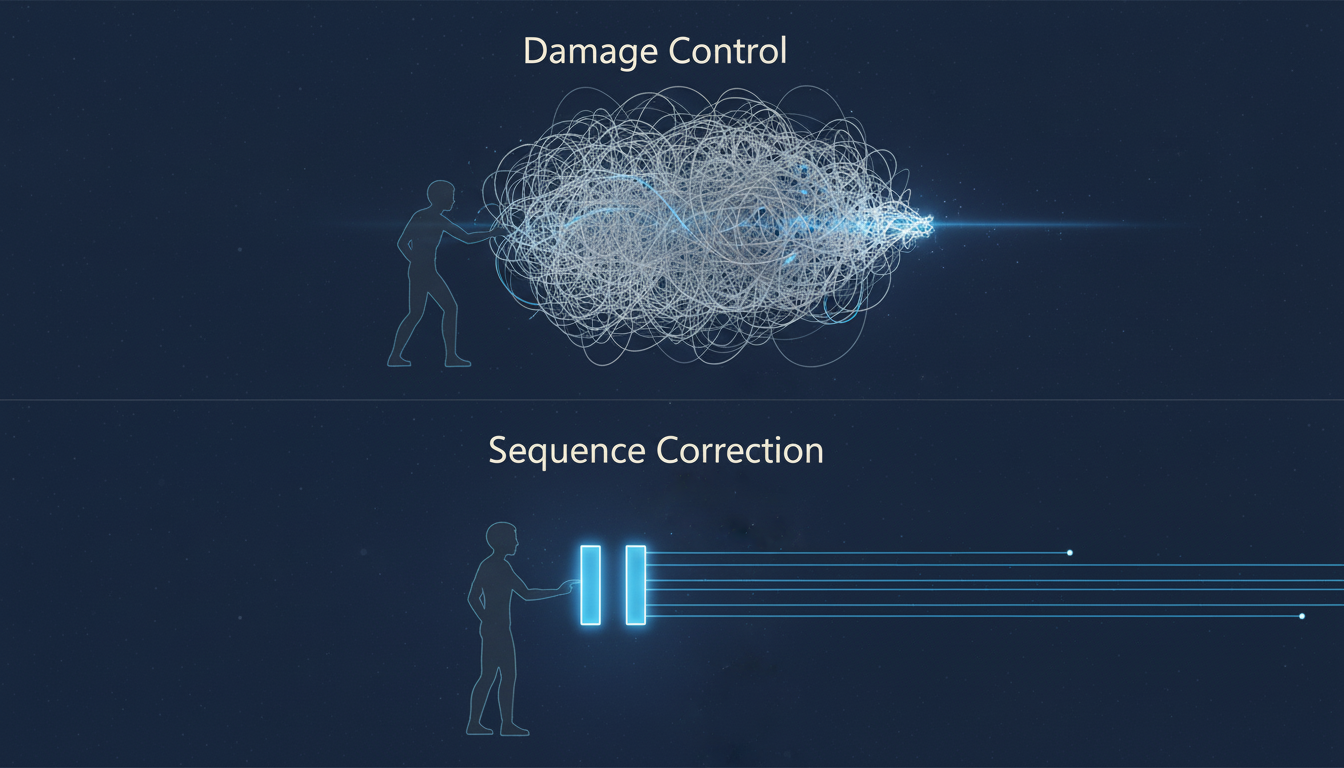
This is where the paradigm shifts from managing damage to correcting the sequence. Instead of trying to calm down after the stress response has taken hold, what if you could intervene before it even begins? This is the core principle of CELF’s timing-based training. ‘Sequence Correction’ is an upstream intervention designed to work at the speed of the nervous system. It provides you with the practical, physiological tools to interrupt the habitual, pre-conscious reaction pattern. By doing so, you prevent the DMN from hijacking your internal state, effectively cutting off the stress response at its source. It’s the difference between constantly cleaning up a mess and simply preventing the spill in the first place.
Achieving Predictable Control: From Theory to Practice
The ultimate goal of this approach is to move beyond mere coping and into a state of genuine self-governance. This isn’t about suppressing emotions or forcing a positive mindset. It’s about building a stable, resilient internal infrastructure that allows you to operate with clarity and composure, even under immense pressure. Through direct-experience techniques, you can gain measurable, predictable authority over your internal state. You learn to regulate your own nervous system on demand, treating your internal environment as a critical piece of performance equipment. This is how high-achievers maintain their edge—not by white-knuckling through stress, but by cultivating an unshakable internal foundation.
Stop Managing Symptoms, Start Commanding Your State
If you’re tired of the endless cycle of stress and temporary relief, it’s time to change your strategy. The constant battle against your own internal state is exhausting and unsustainable. True freedom and peak performance come not from better damage control, but from rendering it obsolete. By shifting your focus upstream and learning to correct the sequence before it starts, you can move from a reactive posture to a state of proactive command. You can finally gain authorship over your internal world, ensuring your inner state matches your external success.
It’s time to discover the neuroscience-consistent techniques that grant you predictable control over your nervous system. Learn how to intervene before stress takes over and build the internal stability you need to thrive under pressure. Explore the path to lasting clarity and self-governance.
Leave a Reply