
You have the title, the responsibilities, and the track record of a high-achiever. Externally, you are the model of success. But internally, it’s a different story—a constant battle with mental fog, emotional friction, and a persistent, low-grade stress that never seems to switch off. You’ve tried it all: meditation apps, productivity hacks, even therapy. While these methods might offer a moment of calm, the relief is frustratingly temporary. It often feels like you’re just patching holes in a sinking ship, leading to the inescapable conclusion that something upstream is running the show.

The Downstream Trap – Treating Symptoms, Not the Source
Most conventional stress management techniques fall into what we call the ‘downstream trap.’ They are designed to help you cope with the end results of stress—the anxious thoughts, the irritability, the feeling of being overwhelmed. Think of it like this: if your sink is overflowing, you can spend all your energy mopping the floor (managing the symptoms), but the water will keep coming until you turn off the faucet (addressing the source). Techniques like breathing exercises or mindfulness are essentially advanced forms of mopping. They are valuable for cleaning up the immediate mess but do little to prevent the next overflow. The frustration you feel is valid because these methods don’t, and can’t, address the root biological ‘signal’ that’s turning the faucet on in the first place.
What is the ‘Upstream Signal’?
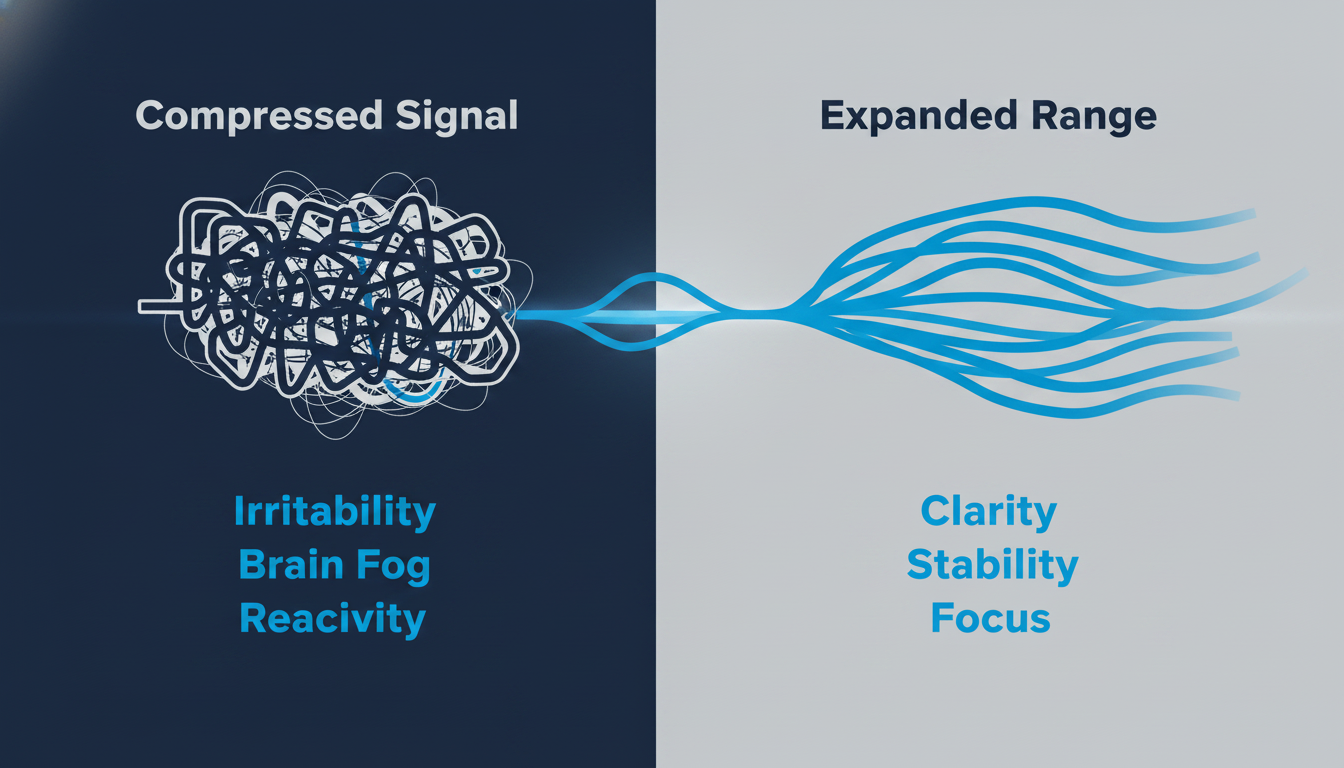
Before you even have a conscious thought or feel an emotion, your nervous system generates a foundational biological signal. This signal acts as a filter for reality, determining your perceptual and emotional ‘range’—your capacity to remain calm, focused, and open. The relentless pace and digital interruptions of modern life put this system under constant pressure, leading to what we call ‘compression.’ Your signal becomes narrowed, your range shrinks, and you default to a state of high alert and reactivity. This isn’t a psychological flaw; it’s a physiological adaptation. This compressed upstream signal is the true source of chronic stress, brain fog, and that feeling of being perpetually on edge. It dictates your internal weather long before your conscious mind has a chance to comment on it.
The Signal Shift Solution – How 5-Second Resets Create Lasting Change
To achieve real, lasting control, you must intervene at the upstream level. This doesn’t require hours of meditation or a retreat from the world. The solution lies in ‘microplasticity routines’—brief, targeted nervous system resets that take as little as two to five seconds to perform. These are not about relaxation; they are about retraining. The key principle is frequency over duration. By performing these tiny resets frequently throughout your day—often triggered by existing digital habits like unlocking your phone—you directly retrain the upstream signal. Each micro-practice helps to decompress your nervous system, gradually widening your ‘range’ and fundamentally shifting your baseline state from reactive to regulated. This consistent, low-dose training creates a profound and lasting shift in your internal infrastructure, enabling you to maintain clarity and composure even under immense pressure.

Conclusion: From Coping to Control
It’s time to stop just coping with stress and start taking predictable control over your internal state. The endless cycle of tension and temporary relief is exhausting and unsustainable. True sovereignty comes not from managing downstream symptoms but from fundamentally reshaping the upstream signal that creates them. By understanding that your internal friction is a biological problem, not a personal failing, you can shift from a reactive mindset to one of empowered, conscious authorship. You have the power to retrain your nervous system and build a more resilient, clear, and stable baseline from which to operate.
If you’re tired of downstream solutions and ready to address the root cause of your internal stress, it’s time to move upstream. Discover the neuroscience-consistent CELF system and learn the micro-practices that provide measurable relief and lasting internal control. Take the first step toward reclaiming your full human range and achieving a state of true personal sovereignty.
Leave a Reply